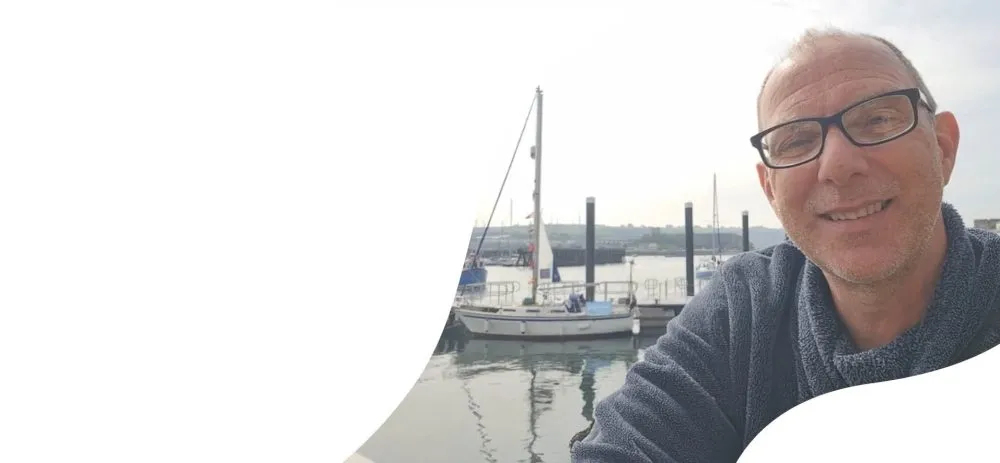
Every sailor knows that the best-laid passage plans are written in the sand at low tide. My initial itinerary to leave Plymouth on the 9th of May was meant to have me well up the coast in Whitehaven by now. Instead, I am sitting in Padstow, riding out the latest storm. I am effectively six sailing days into my journey, but the logbook tells a story of a completely different kind of distance covered, one measured in grease, grit, and the incredible generosity of the coastal community.
The voyage began beautifully. A fantastic initial leg, with the cruising chute flying, carried me from Plymouth to Looe. But the idyllic start was short-lived. A faint, persistent scent of diesel led to an investigation of the bilges. Finding a pool of red fuel, I soaked it up, chalking it up to an accidental spill while filling her to the brim a couple of days prior. But by the time I tucked into Fowey the next day, the smell was overpowering. Looking down, the telltale red was slopping around the bilges once more. After another day spent mopping and scrubbing, I made the frustrating but necessary decision to head back to Plymouth to find the root cause. The diagnosis? The top seal on the fiberglass fuel tank had perished, and the stainless-steel filler was no longer tight. I hadn’t ever filled the tank full before, so this issue on my ‘new to me’ boat hasn’t been manifest before.
Resolving that issue only opened a technical Pandora’s box. The disturbance of the sailing had stirred up sludge and water in the tank, which had sucked straight into the filters. What should have been two days of happy sailing dissolved into two weeks of gruelling maintenance: draining tanks, eradicating the dreaded diesel bug, cleaning bilges, and completely refreshing the fuel line system.
When I finally set off again on the 26th of May, making it as far as Falmouth felt like a triumph. Then, precisely as I was docking, an alarm blared from the instrument panel. The alternator had failed; the batteries were no longer charging.
It is at moments like these that the true spirit of the sailing community reveals itself. Rather than being stuck stranded, I was rescued by Marian, a friend of a friend who solo sails her own Moody 31. She dropped everything to drive me to the train station so I could catch a train back to Plymouth, source a replacement alternator, and get back to the boat to install it.
The weather turned glorious and completely windless which allowed me to motor down the coast to Lamorna Cove. It felt less like the English Channel and more like the Mediterranean. Hiding under the bimini cover, slathering on sun cream, I had the entire bay completely to myself, a deeply peaceful night at anchor that washed away the stress of the previous weeks.
From Lamorna, it was round to St Ives’ visitor moorings. My evening arrival was timed for the tide, and while Ketty 11 can take the ground, she made it very clear she dislikes a rolling swell. At 3:30 AM, in the pitch black before dawn, I was jolted awake by a violent shudder. In my disoriented, half-asleep state, seeing only the dim, ambient street light from the harbour road filtering through my thin blue curtains, panic hit me. A second jolt seconds later had me convinced another vessel had rammed me or that I had broken loose.
Scrambling up on deck, blurry-eyed, I realized the reality: the incoming swell was lifting and dropping her against the harbour floor. I stood watch for thirty tense minutes watching the rudder stock bouncing, unable to do anything. As the tide flooded deep enough, the jolts subsided, and Ketty floated freely and calmly once more. With the dawn, I pushed on for Padstow, slipping through into the none-drying harbour gates just before the latest storm front slammed into the coast.
Being trapped by the weather here, however, has highlighted the real purpose of this journey. I am circumnavigating the UK to raise over £10,000 for Parkinson’s UK. The response in Padstow has been nothing short of humbling. Tourists along the harbour walls have been scanning the QR code printed directly on my sail, asking questions, and offering encouragement, helping me raise over £300 in just a few days. I even sat down for a coffee with Graham, an ex-sailor who is now living with Parkinson’s, reminding me exactly why I am fighting the diesel bugs, the broken alternators, and the sleepless nights.
Navigating these kinds of coastal curveballs is a stark reminder of why we prepare for the unexpected. While a solid toolkit, clean fuel lines, and a community of fellow sailors keep the boat moving, having the backing of a specialist insurer like Haven Knox-Johnston provides the ultimate peace of mind. Knowing you are fully protected allows you to focus entirely on the challenges at hand and the mission ahead.
I might be behind schedule, but as I look out at the storm from the safety of Padstow, the boat is sound, the fuel is clean, and the momentum behind this cause is growing with every single mile.
It is one thing to sit comfortably in a harbour, knowing your vessel is covered by a fully comprehensive insurance policy. It is quite another to be trapped in the pitch-black dark of a remote bay, gripped by the real and sudden fear that you might not survive the night to ever make a claim. Out on the water, perspective changes in an instant.
Nothing in my solo voyage around the UK for Parkinson’s UK had prepared me for a particular night on the wild shores of Lundy Island.
Seeking shelter in Jenny’s Cove
The journey began with a long-awaited departure from Padstow. I had waited for days for the conditions to align, monitoring the shipping forecasts until the ominous word “rough” was finally dropped from the Bristol Channel report. With the tide right and a strong wind blowing out of the east, I finally weighed anchor and set a course for Lundy Island.
Because the wind was coming hard from the east, standard seamanship dictated that I seek shelter on the leeward, western side of the island. I chose Jenny’s Cove, a well-known anchoring spot usually considered safe from the prevailing elements. Knowing that the Bristol Channel has extreme tidal ranges, I came in hyper-aware that there was an 8 metres range that night. To ensure I had enough scope to handle the massive rise, I dropped anchor in four metres of water.
Preparation had been my focus earlier that week. I had purchased an additional 15 metres of anchor chain, splicing it to my existing chain to give me a robust total of 40 metres. Because I was anchoring at high tide, I paid out almost the entirety of that 40-meter chain to ensure the boat would hold securely as the water receded. Satisfied with my calculations, I settled down in the cabin for the evening as the tide began its long drop.
A midnight shift in the wind
At 9:30 PM, 3 hours before low water and just as the final light of dusk was fading into true darkness, I stuck my head out of the companionway to check my position. What I saw instantly set off alarm bells. The easterly wind wasn’t just blowing past the island; it was whipping and contouring around the topography of the hillside, creating a powerful eddy that was pushing my vessel east; straight toward the towering cliffs of the island.
My eyes adjusted to the dark, and a wave of pure adrenaline hit me. Not ten feet away from the boat, jagged and mean, a nasty batch of ridged rocks was sticking up about two feet out of the water. If those rocks were visible so close to my hull, I knew with absolute certainty that there had to be more hidden just beneath the surface, mere inches from the boat.
My immediate thought process pivoted entirely to my survival and protecting Ketty11. I thought it would be a simple matter of starting the engine, lifting the anchor, and moving out into slightly deeper, safer water. But when I went forward and pulled on the anchor chain, it jammed solid. The fluke was wedged immovably into the underwater rocks. I had to act fast and let out just a couple of metres excess chain to ensure Ketty11’s buoyancy didn’t pick the anchor free.
The cry into the dark
I was trapped, unlike the two other vessels anchored in the bay, sitting comfortably in slightly deeper water further out. With the darkness closing in and the wind actively shoving my boat toward the rocks, I realised I might have to abandon ship if the hull breached.
Moving with urgent precision, I quickly prepared my inflatable dinghy, packing my emergency grab bag and getting everything ready to deploy over the side should the worst happen. If the boat took on water, the dinghy would be my only lifeline to reach the neighbouring vessels.
Hoping to alert the other boats to my crisis before it came to that, I switched on the VHF radio to call for assistance. No answer. The other crews had evidently turned their radios off and turned in for the night. Moreover, the high cliffs of the island meant even a call to Falmouth Coast Guard and unanswered.
Desperate to catch their attention, I grabbed my air horn and blew the unmistakable sequence for SOS – three short, three long, three short. I repeated the distress signal a second time, the piercing sound echoing eerily off the massive stone cliffs of Lundy Island. I waited, scanning their decks for any sign of a flashlight or movement. Nothing. The bay remained completely dead, leaving me entirely isolated.
The battle for buoyancy
Realising I was completely on my own, I had to formulate a strategy to keep the boat intact until daylight. I kept the anchor chain tight, plus 2 metres. My fear was that as the tide rose and fell, the sheer lifting power of the boat’s buoyancy would yank the jammed chain, potentially fracturing the deck gear or causing the boat to drift into destruction on the ridges I had seen. I set an alarm on my phone to wake me up every single hour on the hour throughout the night.
Each time the alarm cut through the dark, I dragged myself out on deck to manually pay out an appropriate amount of extra chain to match the rising water, ensuring the boat’s natural buoyancy wouldn’t tear the anchor free or damage the hull.
It was a gruelling, disciplined plan, and it worked perfectly until exhaustion caught up with me. Around mid-tide, my body gave out, and I fell into a deep sleep, missing my alarm for two hours.
I jolted awake, panic flooded my chest. Waking up after losing track of the tide in a field of rocks is a terrifying feeling. I rushed to check the deck. By absolute grace, the anchor chain was still taut, and the boat had held her position. I immediately paid out a few more metres of scope and slept fitfully again while I waited out the final hours of the night as the tide crept to its highest point.
Freedom at first light
At 7:00 AM, I was exhausted, but ready to escape the trap as the tide once more retreated. The neighbouring boats were already moving; in fact, one had already slipped away into the morning mist, and the second would depart just fifteen minutes later.
The anchor was still hopelessly caught, and I had to fight for it. I winched the chain until it was completely vertical and tight, and then used the weight and power of the boat itself as a tool. I motored the boat hard backwards and forwards, aggressively spinning the vessel around on the taut chain to force the anchor to change its angle in the rocks.
After several tense moments of maneuvering, a sudden, loud BANG reverberated through the hull. The anchor had finally broken free from the stone.
Ignoring my electric windless I hauled the chain up as fast as my arms could manage, pilled the chain on deck, and motored out of Jenny’s Cove into the deep, beautiful safety of open water so I could store the anchor safely.
Resilience at Oxwich Bay
Defiant and determined not to let the harrowing experience shake my confidence or ruin the charity voyage, I set my course across the Bristol Channel, heading for Oxwich Bay on the northern coast.
When I finally dropped anchor in the calm waters of Oxwich, I was absolutely spent physically and emotionally drained. As I lay down that night, listening to the gentle lap of safe water against the hull, I looked back on the lessons of Lundy Island.
I closed my eyes and slept very, very well.
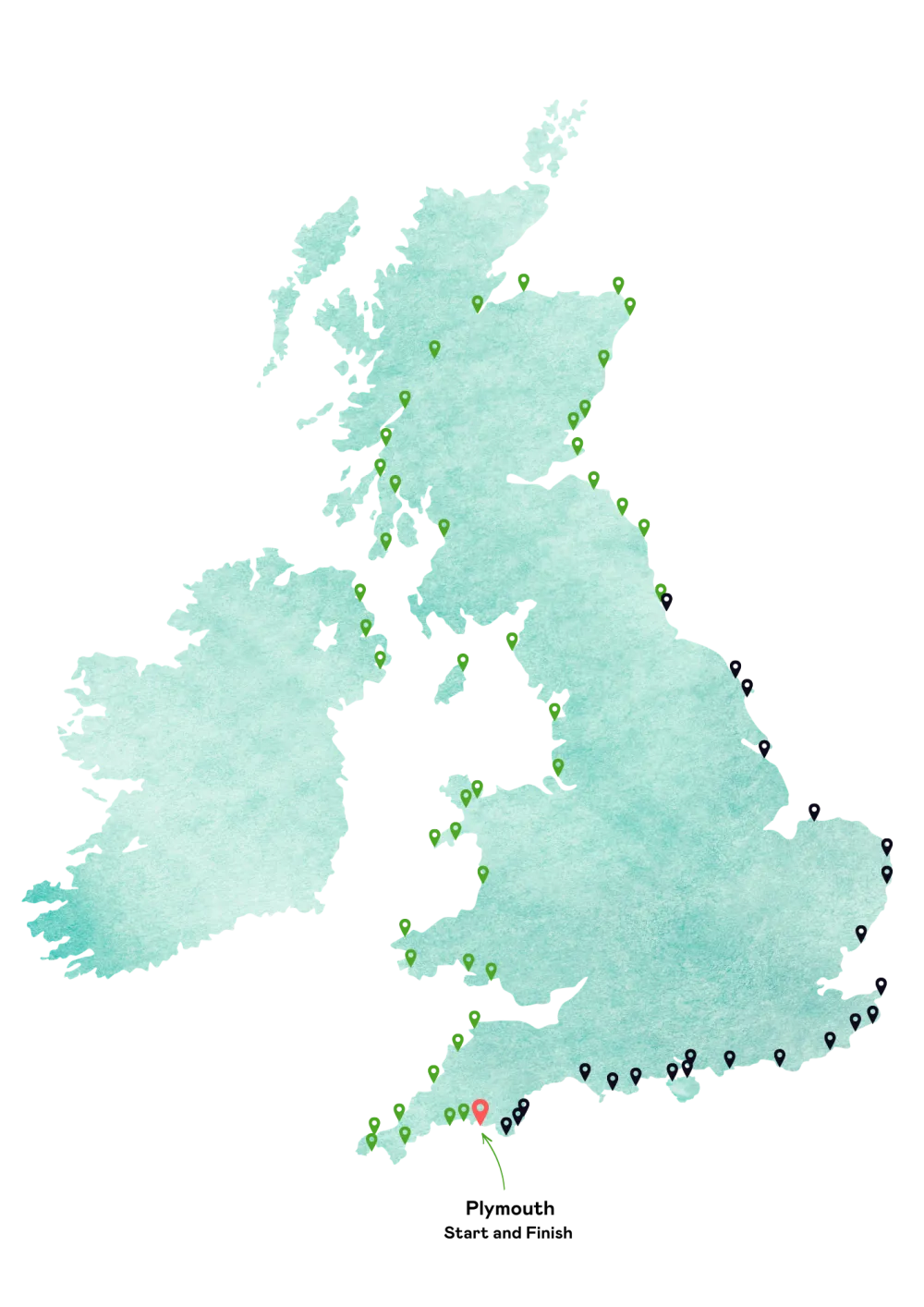
I’ve officially crossed the halfway mark on my solo circumnavigation of the UK in support of Parkinson’s UK, and looking back on the wake behind me, it’s safe to say it has been quite an adventure.
The elements have certainly kept me on my toes. I’ve sailed in sun so hot that I had to hide under the bimini. On the flip side, I’ve pressed through winds so bitterly cold that the very same canvas shelter became my defence against freezing.
It hasn’t all been battling the elements, though. There have been plenty of eerie, glass-calm days where the sails hung completely lifeless, serving no purpose whatsoever. On those legs, the trip transformed from sailing to motoring. It’s always a bit soul-destroying to sit there listening to the engine hum, knowing every hour is just burning costly diesel. But the journey has to keep moving forward.
Every new destination means reaching new people, getting the boat seen, and directing eyes toward the donation QR code on the sail and the full parade of flags flying high.
The contrast in ports of call has been just as wild as the weather. I’ve dropped anchor in serene, secluded island bays and spent the next night moored alongside commercial fishing vessels. I’ve been treated to the finest marina facilities, and at other times I’ve had to hunt around for the public conveniences.
The marine life has been extraordinary, too. I’ve watched pods of dolphins come and go alongside the hull, and glided through swarms of jellyfish. There have been minor casualties along the way, like losing an oar to my dinghy, and unexpected gains, like picking up spare fenders and gear from generous locals and fellow sailors along the way.
As I turn the corner into the second half of this voyage, the mission remains unchanged: keep pushing ahead, raising awareness, and bringing in vital support for Parkinson’s UK, one nautical mile at a time.
There I was at 2:00 in the morning, having completed just over half of the UK coastline, when I suddenly saw a flash of purple across my navigation lights. I’d fouled a pot buoy. The boat came to a jarring stop from seven knots.
With the ropes caught around the rudder skeg, my only option was to dive into the water in the dark with my wetsuit and a waterproof head torch to cut the tangled line free. As a matter of safety, I informed the Coast Guard I would be going into the water, and they requested I call them back when I was finished and out again to ensure I was safe and to check if there was any damage to my vessel.
The east coast of England remains a strong sailing challenge, characterised by long distances between ports, but it’s also where I found lasting camaraderie.
The QR code on the sail has led to many conversations and I’m pleased to say, that as well as helping to increase the funds for Parkinson’s it has helped make me friends.
The Friendships made with the crews of other sailing vessels have been a highlight, with everyone checking in via SMS as we navigated the long stretch down the coast, obviously checking in on AIS to find out where we are and how far we’d travelled. I was also incredibly thankful for the support of fellow sailors who joined me for occasional passages, making the journey much more enjoyable, and to a kind driver who kindly took me for parts to fix my steaming light.
Another milestone was navigating into Wells-next-the-Sea at night, guided by the Harbour Master via his camera system. I was so thankful for that assistance.
I was also touched to be greeted by fellow supporters on my arrival at Ramsgate, bringing me chocolates in support of my fundraising mission for Parkinson’s UK. I also want to thank a supporter who drove forty minutes just to say hello and donate in person.
It’s been an incredible eye-opener to realise how truly kind and supportive people are when they learn about my mission for Parkinson’s UK. My phone lighting up with donation notifications on the GoFundMe page has been the most humbling and greatest reward of this entire voyage.